Endodontics with Microscope
Root canal treatment under the surgical microscope — with up to 20x magnification. This is how we save teeth that others have given up on.
Book appointment →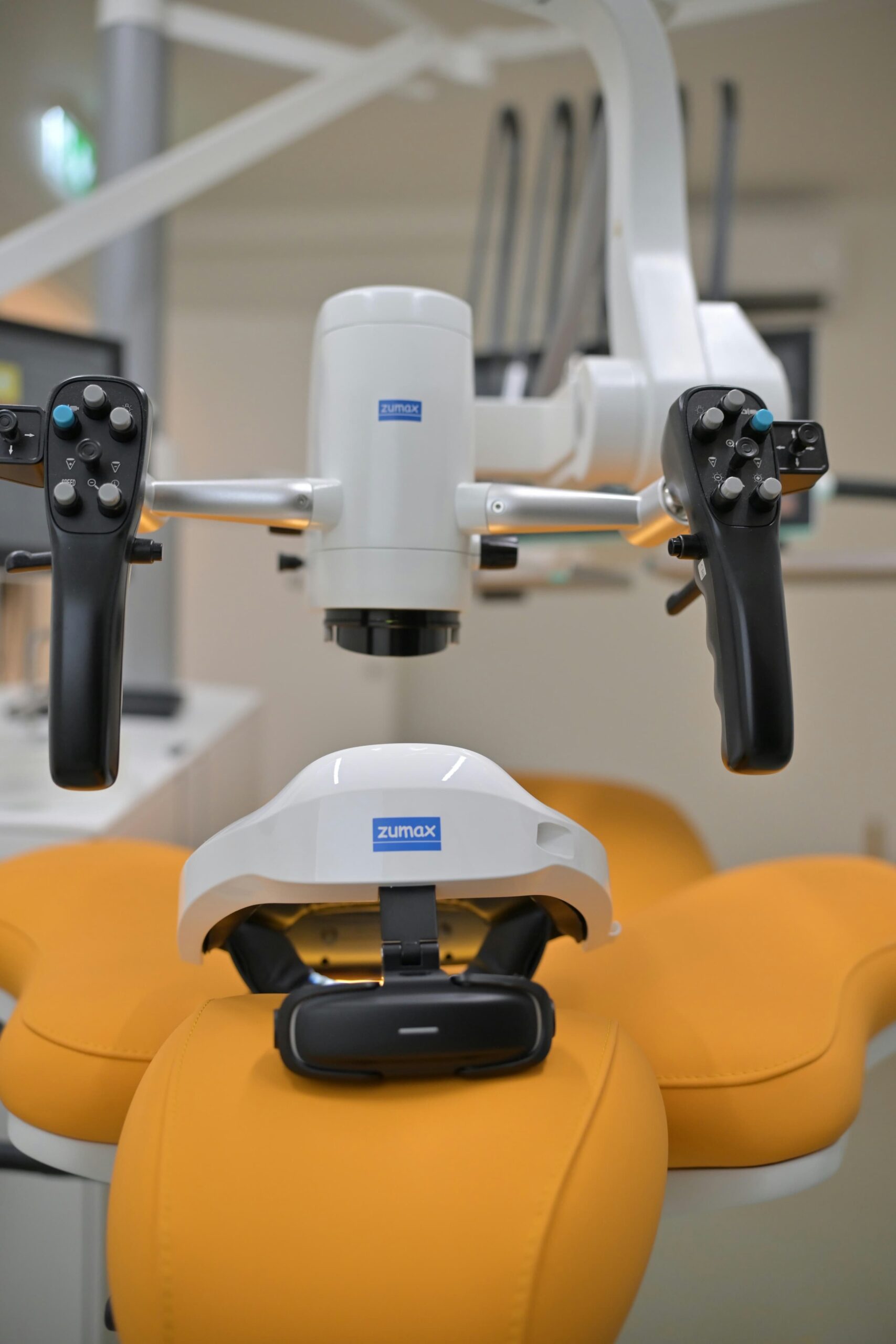
Why Endodontics with a Microscope?
Root canals are tiny. Some thinner than a hair, often branched and hidden. Without magnification, you're essentially working blind. With the surgical microscope, I see what's really going on — and that's exactly what makes the difference between saving and losing a tooth.
Conventional
- Essentially by feel — the X-ray only shows part of it
- Hidden side canals? Often not found at all
- The inflammation returns after months
- In the end: "Unfortunately, we need to pull it"
With Microscope
- I see everything — 20x magnified, crystal clear
- Even the smallest side canal is found and cleaned
- Every move is precise
- Over 90% success rate — our experience confirms this
How the Treatment Works
Diagnosis & Consultation
First, we take a close look at the tooth. X-ray, findings, all your questions. I'll honestly tell you whether the tooth can still be saved, what I plan to do, and what to expect. No surprises.
Anaesthesia & Preparation
The tooth is completely numbed — you won't feel a thing. If you'd like, you can also have nitrous oxide to take away the tension. A rubber dam shields the tooth to keep everything sterile.
Treatment Under the Microscope
Under the microscope, I find every canal — even the hidden ones. The inflamed tissue is completely removed with fine instruments and irrigation. It requires time and precision, but that's exactly what matters.
Filling & Sealing
Once everything is clean, I fill and seal the canals. I usually recommend a crown afterwards — a root-treated tooth becomes more brittle over time and needs that protection.
Follow-up
After a few weeks, we check the tooth again. Is everything healing as expected? Then this tooth will hopefully serve you for many more decades.
Frequently Asked Questions
Is a root canal treatment painful?
No. The tooth is fully anaesthetised — you won't feel anything during treatment. For significant nervousness, we also offer nitrous oxide, which relieves the inner tension. The tooth may be slightly pressure-sensitive for a few days afterwards, but this subsides quickly. A standard painkiller is usually sufficient.
How long does the treatment take?
Plan for 60 to 90 minutes. In most cases, we complete everything in one session. For particularly complex cases — such as severely curved roots or a previous unsuccessful treatment — a second appointment may be necessary.
Why not just pull the tooth?
Because no implant or bridge is as good as your own tooth. A natural tooth has a sense of pressure, keeps the jawbone stable, and integrates perfectly. If I can save the tooth, I will.
What is the success rate?
Studies show the success rate for microscope-assisted root canals is over 90%. That's significantly more than without. In our practice, we're even higher because I take the time each tooth needs. But I'm also honest: if I see a tooth can't be saved, I'll tell you.
Save the tooth instead of pulling it.
Book an appointment — let's take a look together.
Book appointment